Animify
Among the six curated anime styles available on AnimifyAI, the watercolor style occupies a unique position. It is not based on a specific film or director's aesthetic (unlike Ghibli or Shinkai) and is not derived from a genre convention (unlike Cyberpunk). Instead, the watercolor anime style draws from a deeper artistic tradition — the centuries-old practice of watercolor painting itself — and adapts it to anime character conventions. The result is a distinctive aesthetic that feels simultaneously classical and contemporary: the soft, bleeding edges and translucent washes of traditional watercolor, applied to anime-styled faces and figures.
This guide explores every facet of the watercolor anime style: what makes it visually distinct, how AI recreates watercolor effects from your photos, which types of photos produce the best results, and when this gentle, romantic style is the right choice for your transformation.
What Defines Watercolor Anime: The Visual Characteristics
Soft Color Bleeding and Translucency
The most immediately recognizable characteristic of watercolor anime is how colors interact at their boundaries. In typical anime styles, colors stay within their lines. In watercolor anime, colors bleed gently into one another. Edges are soft and organic rather than hard and defined. The AI achieves this effect through prompt engineering that emphasizes "soft ethereal washes" and "gentle color bleeding" — simulating the visual result of water on pigment without the actual physics.
Delicate, Suggestive Linework
In most anime styles, outlines play a structural role — they define boundaries with clarity. Watercolor anime takes the opposite approach. Lines are thin, often broken, and sometimes disappear entirely. Boundaries between forms are suggested by color transitions rather than explicit contours. This creates an inherent softness that makes watercolor anime feel gentler and more atmospheric than its harder-edged counterparts.
Pastel-Dominant Color Palette
 Pastel tones and soft transitions define the watercolor anime palette
The watercolor anime palette skews strongly toward pastels and muted tones. Pinks lean toward blush and rose rather than hot pink. Blues are sky-toned and washed-out. Greens are sage and mint. Even brighter colors are softened by the translucent quality of the watercolor treatment. This restrained palette gives watercolor anime its characteristic sense of gentleness and romance.
Atmospheric Softness and Emotional Warmth
The cumulative effect — soft color bleeding, delicate linework, and pastel tones — is an all-over atmospheric softness that makes watercolor anime feel emotionally warm. No sharp edges, no high contrast, no intense saturation. It communicates calmness, nostalgia, and tender emotion. This makes it especially effective for photos where the emotional content is already soft: couple photos, images of children, sentimental landscapes, and intimate portraits. What sets watercolor anime apart from other soft aesthetics — like the Ghibli style's painterly warmth — is its translucency: you can almost see the paper texture beneath the pigment, giving every image the feel of a physical art object rather than a screen render.
How AI Creates Watercolor Effects From Photos
When you apply the watercolor style to your photo, the AI is doing something more sophisticated than applying a watercolor texture overlay. The style prompt instructs the model to interpret structural edges as "soft bleeding boundaries" rather than "hard outlines." Color regions blend at their margins. The model's attention mechanism is biased toward smooth gradients. The result is your photo completely redrawn with watercolor-typical behaviors: colors that bleed, lines that suggest rather than define, and an overall softness that feels organic rather than digital. This reinterpretation approach makes AI watercolor anime distinct from both real watercolor painting and simple digital filters.
Best Photo Types for Watercolor Anime Transformation
Natural Landscapes With Water Features
Photos of lakes, rivers, oceans, and waterfalls produce stunning watercolor anime transformations. The AI's tendency toward soft, bleeding color transitions naturally suits organic water shapes. A mountain reflected in a lake becomes a wash of blues and greens bleeding into one another. A waterfall becomes a cascade of translucent white and blue.
Golden Hour Portraits
The warm, diffused light of golden hour is already soft and romantic — exactly the qualities watercolor anime amplifies. A portrait taken during the hour after sunrise or before sunset, especially outdoors, transforms into something that feels like a cherished memory rendered as art.
Floral and Garden Photography
Photos featuring flowers and gardens are a natural fit. The organic shapes of petals lend themselves to soft color bleeding, and the already-present pastels of flower photography are enhanced by the watercolor treatment.
Couple and Romantic Photography
The watercolor style's softness and emotional warmth make it the ideal choice for romantic photos. A couple's portrait transformed through watercolor anime takes on an almost fairy-tale quality — soft, dreamy, emotionally resonant. It is the perfect style for engagement announcements, anniversary posts, and any image where love and tenderness are the central message.
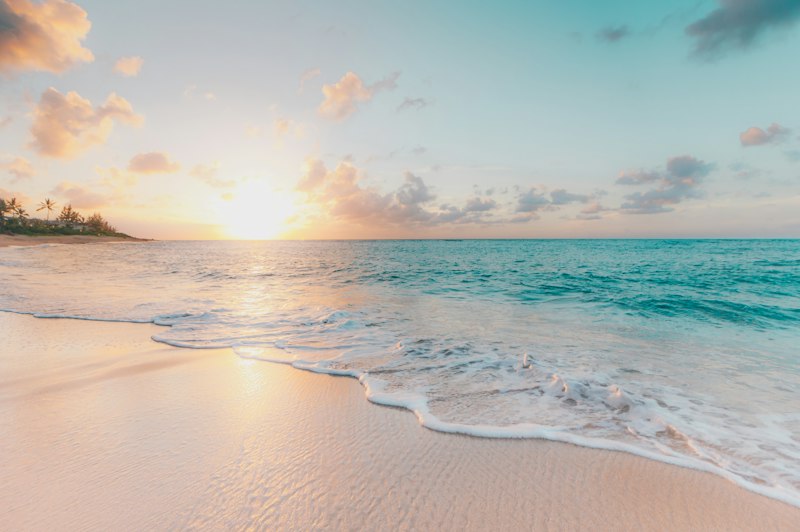 Landscapes with natural elements like water and sky produce the most ethereal watercolor transformations
When to Choose Watercolor Over Other Styles
| Desired Feeling | Best Style | Why |
|---|---|---|
| Romantic, tender, intimate | Watercolor | Soft bleeding colors and pastel palette amplify emotional warmth |
| Warm, nostalgic, magical | Ghibli | Painterly warmth and nature reverence |
| Cinematic, dramatic, yearning | Shinkai | Lens effects and sky drama create emotional intensity |
| Edgy, futuristic, intense | Cyberpunk | Neon contrast and urban grit create high-energy visuals |
| Fun, cute, playful | Chibi | Exaggerated proportions radiate pure joy |
Choose watercolor for: wedding and engagement photos, newborn and family portraits, sentimental travel memories, artistic social media content, and romantic gifts. Avoid watercolor for: gaming profile pictures (use Cyberpunk or Chibi), high-energy marketing, and images where you want sharpness over softness.
Creative Applications for Watercolor Anime Art
Beyond personal enjoyment: wedding and engagement content (framable couple portraits with fairy-tale quality), nursery and children's room decor (gentle, artistic warmth for family photos), greeting cards and invitations (hand-painted quality for birthdays, anniversaries, and special occasions), social media aesthetics (for lifestyle, wellness, or art-focused accounts, a watercolor anime profile picture communicates softness and creativity), and printed photo books (transformations interspersed with original photos create a uniquely artistic album).
Technical Challenges of Watercolor AI Rendering
Creating convincing watercolor anime output is technically more difficult than it might appear. Watercolor as a physical medium is defined by unpredictability — pigment spreads through wet paper in ways that are partly governed by physics and partly by chance. AI models, by contrast, are deterministic engines optimized for consistency and repeatability. Reconciling these opposing tendencies — making a deterministic system produce output that feels organic and spontaneous — requires sophisticated prompt engineering and careful model parameter tuning.
Early attempts at AI watercolor art often failed because the models defaulted to digital sharpness: clean edges, uniform textures, predictable color transitions. The solution was not to add a "watercolor filter" on top of the output, but to teach the model to think in watercolor from the start — to treat soft boundaries as the default rather than the exception, to introduce controlled variation in texture density, and to simulate the semi-random pigment distribution that gives real watercolor its characteristic charm. Each generation is slightly different, even from the same photo and prompt — a deliberate feature that mimics the uniqueness of hand-painted watercolor pieces.
Pairing Watercolor With Other Styles for Multi-Image Projects
A creative strategy that many AnimifyAI users have discovered is using watercolor as one element in a multi-style series. Transform the same photo in watercolor, Ghibli, and Chibi styles, then display them as a triptych — three different artistic interpretations of the same moment. The contrast between styles highlights what makes each one unique: the watercolor version feels hand-painted, the Ghibli version feels cinematic, and the Chibi version feels joyful. This approach works beautifully for Instagram carousels, printed photo collections, and personalized gifts that show off the full range of AI anime art possibilities. For more on multi-platform content strategy, see our social media marketing guide.
Try the Watercolor Anime Style
In a creative landscape increasingly dominated by high-contrast, high-saturation visual content, the watercolor anime style offers something genuinely countercultural: softness. It does not demand attention through intensity. It invites attention through gentleness. For portraits, it transforms photographs into keepsakes. For landscapes, it turns scenery into poetry. For couples, it creates images that feel like the visual equivalent of a love letter — tender, personal, and irreducibly warm. In a world that often feels loud, watercolor anime art offers a visual quiet that is genuinely valuable.
The watercolor aesthetic also holds unique appeal for applications where other anime styles might feel too aggressive or stylized. Wedding invitations, baby announcement cards, memorial portraits, and therapeutic art contexts all benefit from the watercolor style's inherent gentleness. The soft color bleeding and atmospheric warmth communicate care in ways that bolder styles cannot. Whether you are creating a gift for someone you love or simply treating a personal memory with the artistic reverence it deserves, the watercolor anime filter provides a visual language perfectly suited to tenderness.
Transform your photo with the watercolor anime filter free on AnimifyAI. Upload a portrait, landscape, or couple photo and see it reimagined in soft washes and pastel tones in seconds. Three complimentary transformations, no account required. Explore all six styles — from bold Ukiyo-e to playful Chibi — and find the aesthetic that matches your vision.
Looking for a gift that feels personal and handmade? Transform a favorite photo into watercolor anime art and print it on canvas or fine paper — the soft, bleeding colors translate beautifully to physical media, creating a keepsake nobody will believe came from AI.